
English| EUR
Suggested for you
More currencies
Choose a language
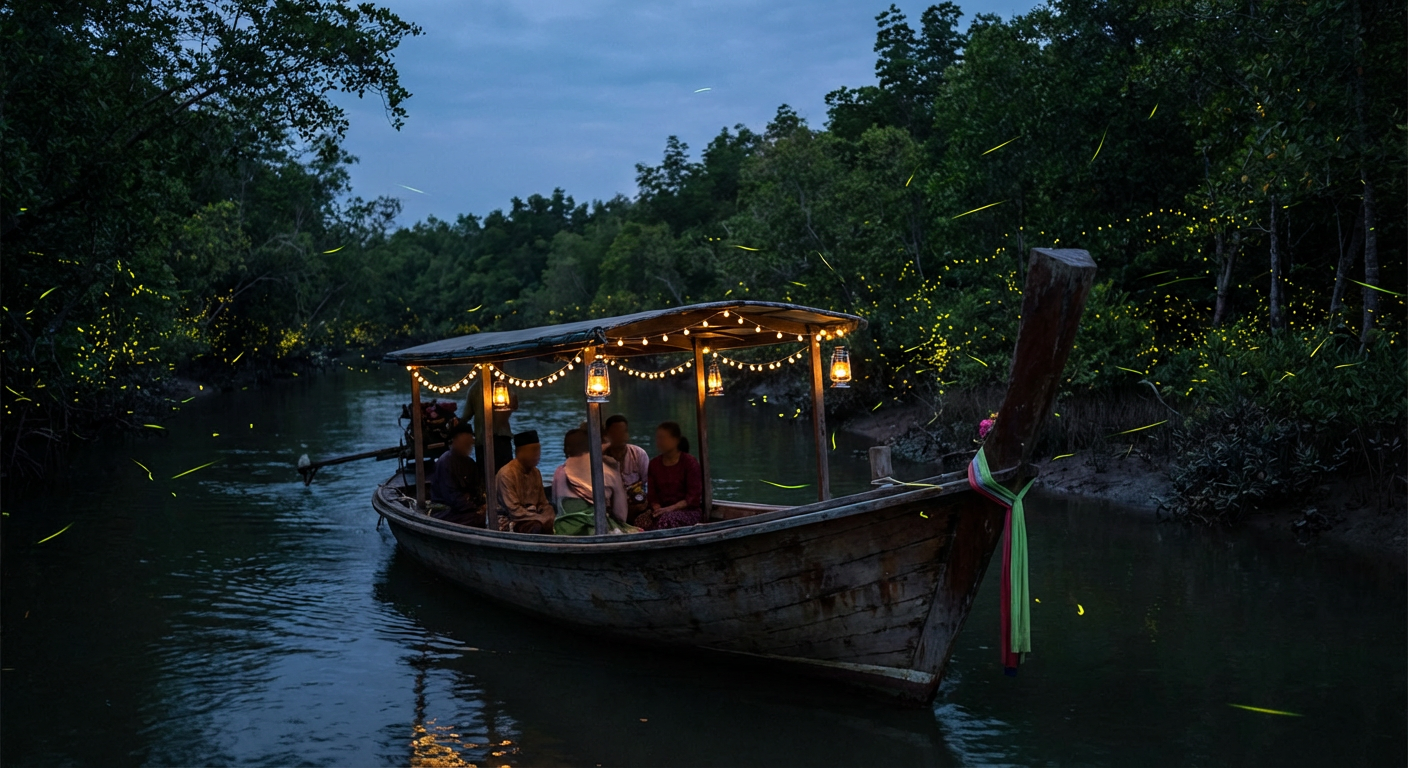
The glow on the Loboc River is not switched on at a fixed hour — it follows the sun. This Firefly Watching Bohol Time Guide sets out when the display begins, when it thins, and why the fireflies locally called aninipot keep an evening-only rhythm. It also flags what shapes any given night: moonlight, rain, and how far downstream toward Loay the boats travel.
Quick answer
The best arrival window on the Loboc River is 18:00–20:00, because fireflies show best in total darkness after sunset and typically peak before 8 PM. The river area itself keeps an evening pattern of 18:00–21:00 every day of the week. Entry to the riverbank is free; fees apply only to organised boat tours. Moonless, rain-free nights deliver the densest glow in the overhanging trees.
Fireflies are beetles, not flies, and the adults of the species that light the Loboc River live only a few weeks. Nearly all of that time goes to signalling for a mate. The insects do not scatter at random. They colonise particular trees — mangrove, nipa palm, stands of bamboo leaning over the water — and return to the same riverbank perches night after night. Mature colonies sometimes flash in near-unison, a rhythm easiest to read from mid-river. That habit is why firefly watching Bohol time is a question about darkness, not about a gate schedule. Context explains the rest. Bohol lies close to the equator, so twilight is short and full dark arrives quickly rather than lingering for hours. The Loboc is also a working river. By day it carries floating restaurants, the paddles of the Loboc River cruise, and the voices associated with the Loboc Children's Choir in the town centre beside the old stone church. That daytime traffic fades once the light goes, and the engines with it. What remains is a narrow corridor of trees between Loboc and the Loay river mouth, dark enough for the display to register. Moon phase matters more than most visitors expect: a bright moon washes out the glow, and so does rain on the canopy. The nearby Abatan River in Cortes supports its own colonies, which is useful to know when water levels or weather close one stretch. Knowing the window is half the task; using it well is the other half. Paddle boats and non-motorised bancas sit closer to the aninipot — the Visayan word for firefly — than engine-driven craft, and quiet carries its own reward. White phone screens and camera flashes break the display for everyone aboard, so guides on a Loboc River firefly tour ask for lights off and voices down before casting off. Seats are limited on the quieter boats, and the smaller operators work from a handful of landings rather than one terminal. The sections that follow carry the detail: the nightly schedule, what the river area costs, how to reach Loboc from Tagbilaran or Panglao, and what to bring. Read together, they turn firefly watching Bohol time from a guess into a plan, and the booking pages handle the rest once the evening is chosen.
“The fireflies keep the sun's schedule, not the clock's.”
The best window for firefly watching on the Loboc River occurs between 18:00 and 20:00. Success depends on total darkness following sunset, as the bioluminescence and movement of the fireflies peak during these early evening hours.
Warm, 26°C–32°C; clear skies assist visibility.
Drier conditions result in clearer river banks and more active firefly colonies.
Humid, 25°C–31°C; occasional rain interruptions.
Rainy weather often reduces visibility; plan visits during dry spells for better sightings.
—
Visiting midweek avoids the larger volume of weekend visitors, allowing for a quieter experience on the river.
Verdict: The best slot is Monday to Thursday between 18:00 and 20:00 during the dry season months of March or April.
Firefly watching tours on the Loboc River operate daily throughout the week.
Access to the Loboc River area is free of charge. Costs are only incurred when participating in organized boat tours required for firefly watching.
Verdict: While the river area is free to access, visitors pay fees to private operators for organized boat tours.
The Loboc River is located in the town of Loboc, Bohol. Visitors typically access the river launch points via the main Bohol Circumferential Road connecting Tagbilaran City to the interior municipalities.
Integrated Bus Terminal (IBT) in Tagbilaran to Loboc via Bohol Circumferential Road
Rental or private vehicle from Tagbilaran via Bohol Circumferential Road
Private hire from Tagbilaran City center to Loboc River
Coordinate your transport to reach the designated river launch point by 18:00 to ensure you are ready for departure. Confirm your return transport arrangement in advance, as public transit options become limited after dark.
Prepare these essentials for a comfortable evening boat tour on the Loboc River.
Everything you need to know about firefly watching bohol time
The ideal firefly watching bohol time is between 18:00 and 20:00. These nocturnal insects are most visible during this window when the environment is in total darkness.
There is a 0 PHP entrance fee to access the river area. Please note that costs only apply if you choose to participate in an organized boat tour.
Yes, the area is open daily from Monday through Sunday. You can experience firefly watching bohol time during any of these operating days.
Visitors typically allocate a few hours for the experience, keeping the 18:00–21:00 operating window in mind. It is best to arrive early in the evening to maximize your time on the water.
Children are generally welcome to join these evening nature cruises. We recommend checking with local boat operators regarding their specific safety policies for minors.
The best arrival window for firefly watching bohol time is 18:00–20:00. Arriving during this period ensures you are ready as the sky reaches full darkness.