
English| EUR
Suggested for you
More currencies
Choose a language
Loboc River does not charge a standalone gate fee for firefly watching. Access is provided through tour operators and resort packages that bundle the boat ride, guide service, and river access into a single rate.
Quick answer
There is no entrance fee for firefly watching at Loboc River. The experience operates through tour operators and resort packages rather than a ticketed gate system. You pay for a guided boat tour that includes river access, and rates vary by operator. The tours run nightly from 18:30 to 21:00.
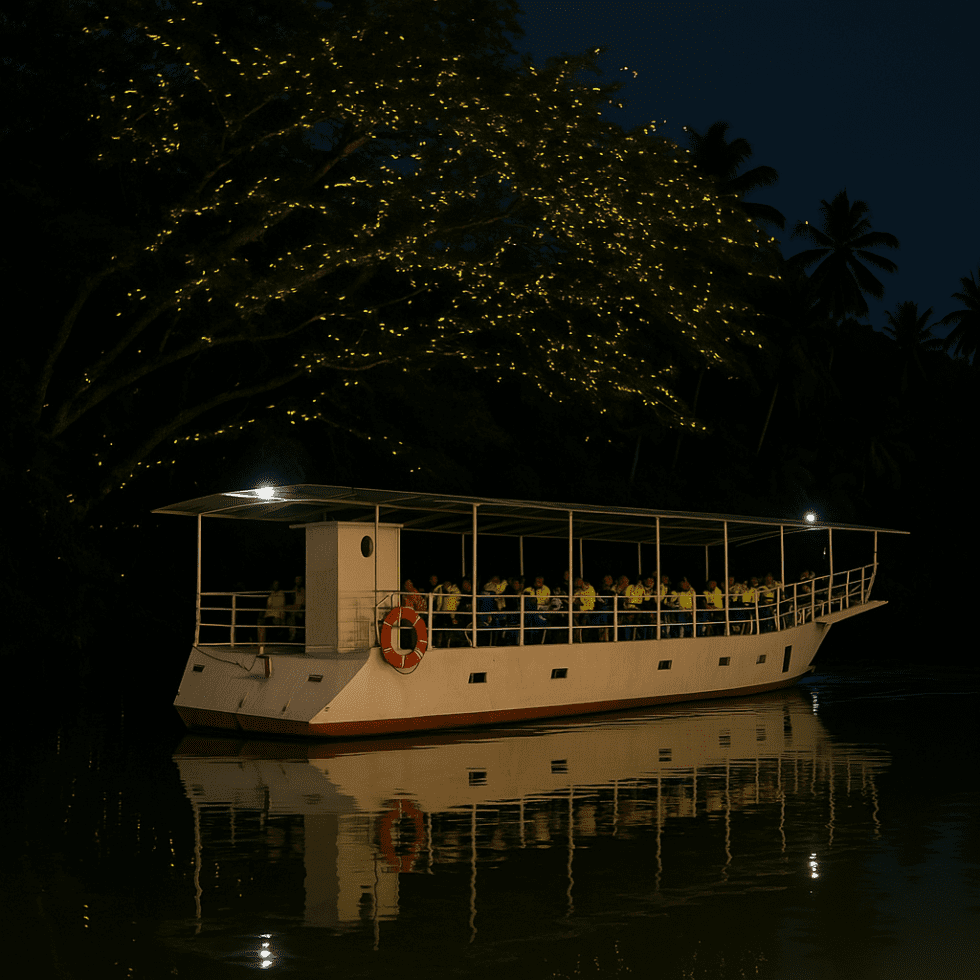
The Loboc River firefly colonies exist on privately managed stretches of riverbank where local operators hold agreements with landowners. No government agency collects a gate fee because the fireflies themselves live in continuous habitat along multiple kilometers of mangrove forest, not within a fenced perimeter. Instead, tour operators bundle river access into their service packages. The firefly watching Bohol entrance fee structure reflects this decentralized model. Each operator negotiates access rights with riparian landowners and sets package rates that cover fuel, boat maintenance, guide wages, and site access. Small outrigger boats carry four to eight passengers. Larger pontoon boats handle groups of twelve to twenty. Solo travelers often join shared departures to split costs. Peak-season demand between December and April pushes prices upward as operators add evening departures. Most operators cluster their docks near the Loboc Ecotourism Center, though a few resorts maintain private launch points upstream. The Loboc River firefly cruise traditionally departs at dusk when the first males begin signaling. Boat captains idle engines near the densest colonies and allow passengers ten to fifteen minutes of silent observation before returning. The entire loop takes forty to sixty minutes. Mangrove restoration projects along the eastern bank have expanded firefly habitat since 2023, increasing sightings during the dry months. Operators include life vests, flashlight-free protocols to protect firefly breeding behavior, and basic entomology briefings in their package rates. Some add transfers from Tagbilaran or bundled stops at the Loboc Church ruins. Independent travelers who arrange their own transport to the river pay only the boat fee. Resort guests sometimes receive discounted rates as part of multi-day packages. The firefly watching Bohol entrance fee remains one of the more affordable wildlife experiences in the Visayas, particularly when compared to ticketed reserves elsewhere in the archipelago.
“The fireflies live in continuous habitat along multiple kilometers of mangrove forest, not within a fenced perimeter.”
Preparation ensures a better viewing experience on the river while preserving the natural habitat of the fireflies.
Apply mosquito repellent before boarding your boat to avoid disrupting the fireflies with scented sprays later. Long-sleeved clothing provides better protection against river insects than topical lotions alone.
Keep voices at a low whisper throughout the cruise to avoid startling the fireflies and other local wildlife. Noise can deter the insects from gathering near the riverbanks.
Flash photography is prohibited as it blinds the fireflies and ruins visibility for other guests. Rely on high-ISO settings or long exposure techniques without artificial lights.
Wear neutral-colored, lightweight clothing to blend into the environment and keep cool in the humid river climate. Dark colors are preferred as they do not reflect light during the cruise.
Remain seated and keep limbs inside the boat at all times for safety. The boat operators are trained to position the vessel for the best views while minimizing environmental impact.
Everything you need to know about firefly watching bohol entrance fee
Booking ahead is recommended to ensure your spot on a vessel for these nocturnal river excursions. Since these tours rely on specific boat departures, securing a reservation via an official provider is standard practice.
It is not advisable to arrive without a pre-arranged tour, as there is no independent entry point for walk-in guests at the river. Tours are conducted by local operators who manage the necessary permits and equipment for river access.